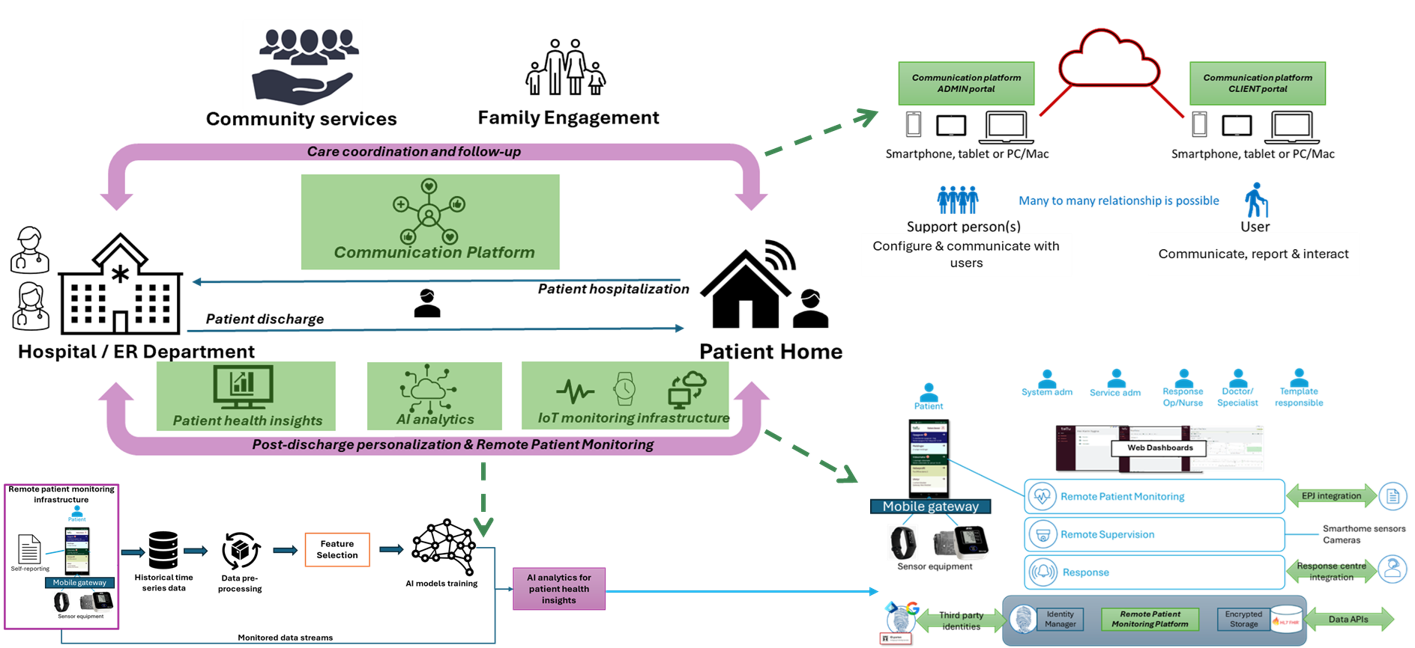
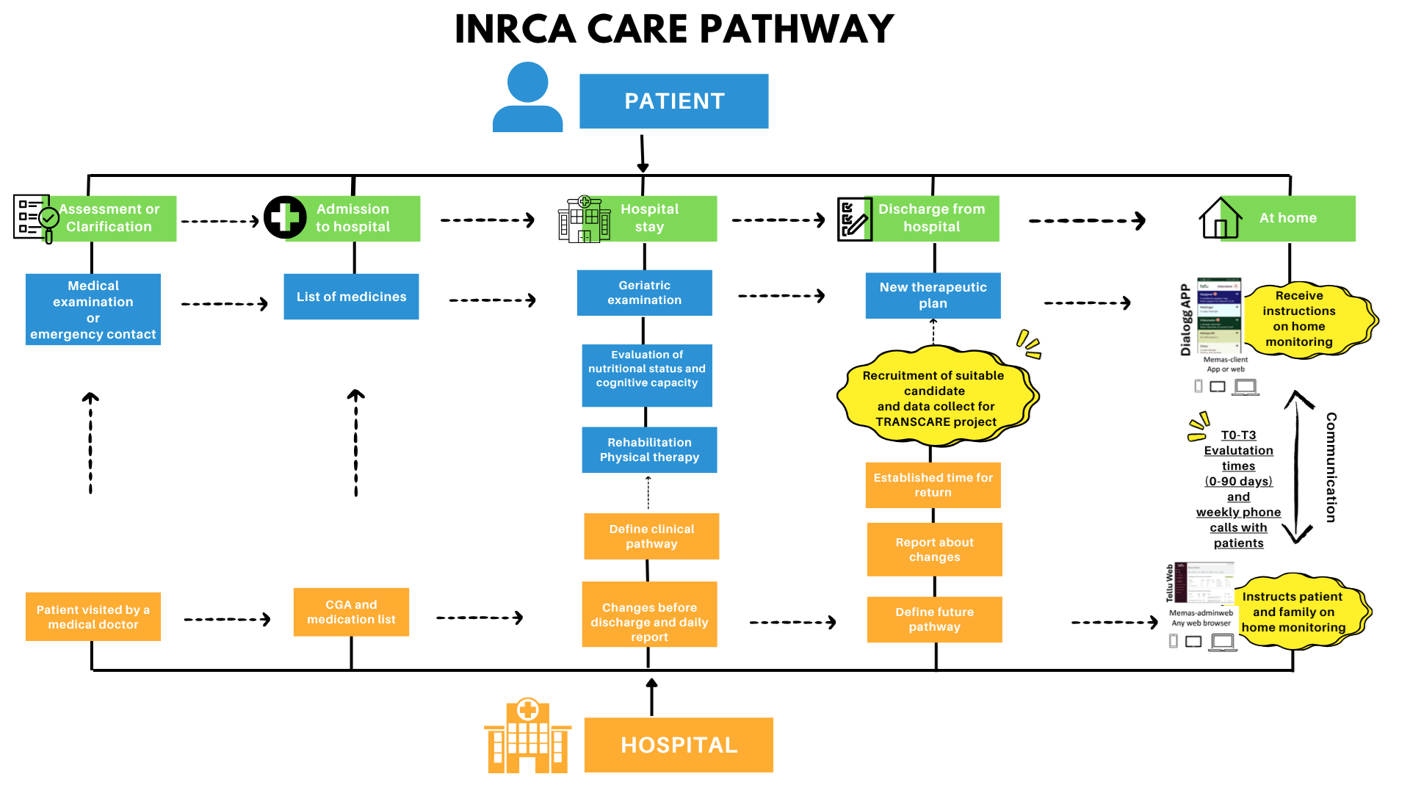
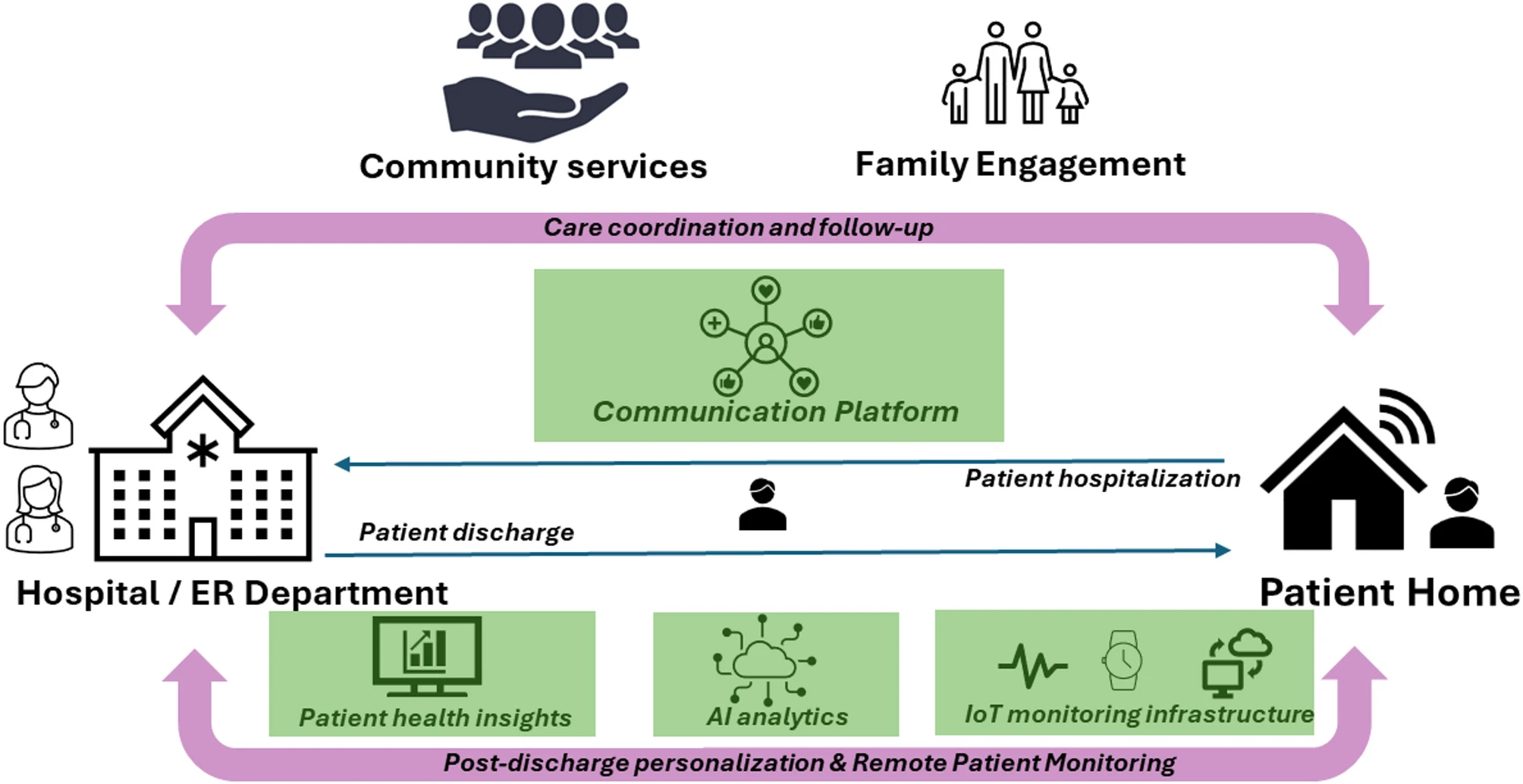
The main goal of TransCare is to address key challenges in transitional care within health and care systems by developing a technology-assisted solution based on IoT monitoring, AI, and digital support and communication tools. The project focuses on integrating this solution into existing care pathways and piloting it with patients across different healthcare contexts in Europe (Norway, Italy, and Romania), while considering comorbidities such as heart failure and frailty in patients.
To achieve its main goal, TransCare will pursue a set of interrelated support objectives: (O1) Study how the care pathways will need to be re-designed for allowing the integration and usage of the technology in different hospital and healthcare settings providing the necessary knowledge for care relocation from hospital to home; (O2) Adapt and scale the developed IoT, AI & digital assistance solution for transitional care considering the specificity of the different contexts in which the trials will be conducted; (O3) Setup and conduct trials to assess the potential of the technology to reduce the rate of rehospitalization within 30 days relieving the pressure on health and care facilities, aiming to establish a clinically validated value proposition for the technology; (O4) Study the value-based payment models in the target countries to provide guidelines for shared payment responsibilities (national or local government, insurance companies, patients), and quality metrics focused on patient outcomes that can incentivize hospitals and healthcare providers to invest in avoiding readmissions; (O5) Dissemination of the findings and key stakeholders’ engagement through a multi-channel dissemination strategy.
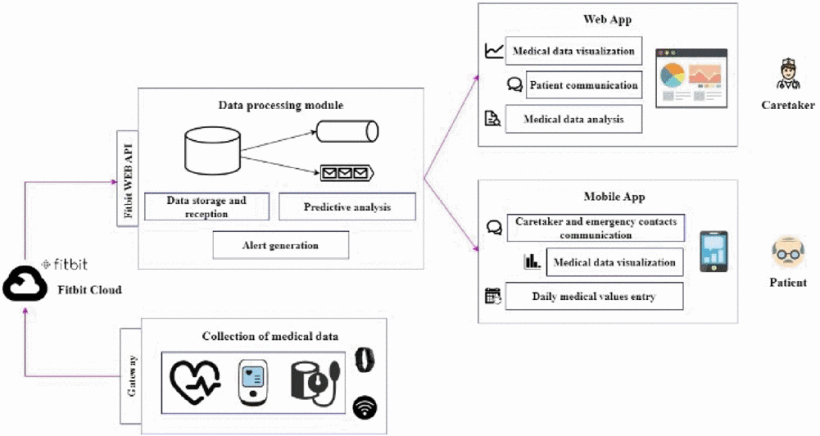
The main outcome of TransCare will be a validated, integrated digital solution for managing transitional care from hospital to community or home settings. The solution will combine IoT-based remote patient monitoring, AI health risk assessment, and a digital communication platform to support coordinated post-discharge care for patients with chronic conditions. A second important result will be a comprehensive set of evidence-based guidelines for redesigning transitional care pathways to enable effective integration of the developed transformational technology into different healthcare settings and national systems. These guidelines will define roles and responsibilities for healthcare professionals, caregivers, and patients, and will reflect the specific organizational, regulatory, and structural contexts of the countries involved in the trials. Finally, the project will also generate a validated value proposition demonstrating the effectiveness and feasibility of the solution, supported by trial data. Furthermore, TransCare will deliver recommendations for sustainable implementation, including insights into data sharing across the care continuum and alignment with value-based care principles.
 Italy
 Norway
 Romania